

Are Sick Days Affecting the Health of Your Business?


Jerry & Kelly Gordon, owners of J.Gordon Designs
Giving full-time employees a week or two of paid vacation time each year is pretty common in commission-based salons. But many owners are finding it’s not enough for their stylists. “Some of our team members have spouses who are executives and have up to six weeks vacation, others are from foreign countries and want more time off for an extended trip home,” says Karen Gordon, who owns J. Gordon Designs in Chicago with husband Jerry. “As an owner, you want to be benevolent, but it’s a big impact to a small business owner.” J. Gordon Designs employs 23 staff members—15 are stylists. Recently, she looked back at a previous year and calculated that the salon’s team took a combined 370 days off—a big impact to the salon’s bottom line.
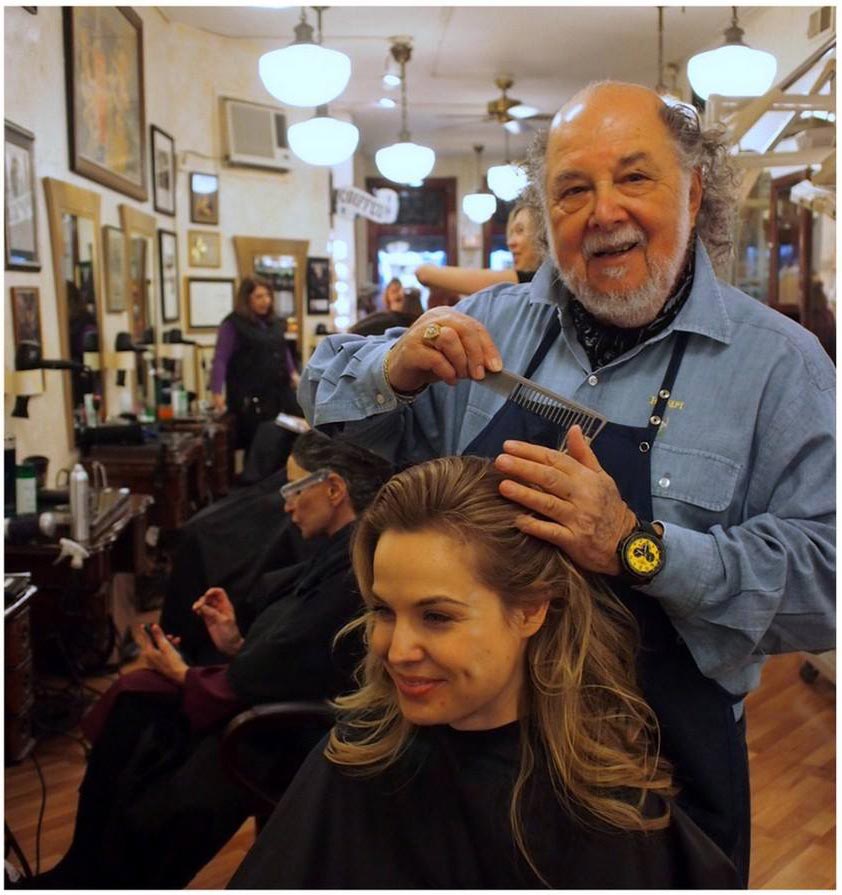
Jerry Gordon with a client
Beyond the financial loss, Gordon feels being put in the position of deciding who gets additional time off and who doesn’t puts the owner in a bind. “If you say no, you run the risk of losing a valued employee, and if you say yes, then you are left holding the bag for the salon’s fixed expenses, as well as the lost service and retail revenue that comes from turning those clients away,” says Gordon. “Plus, owners get tired of all the requests and excuses and having to be the judge and jury for each situation.” It was one such request though, that helped the salon create a system for recouping lost revenue. One of their stylists was dating someone who had a young child and wanted to go away on a weekend camping. She told Gordon she was willing to make up the time or take a change in her pay to make up the lost revenue. “Interested, I said, ‘Tell me what you propose,’” remembers Gordon. The proposed solution evolved into a new system J. Gordon Designs implemented almost a year and a half ago. Now, if stylists want to take a day off after they have used up all their allocated time off, they can make it up by taking a 5-percent deduction in their gross service sales over the next two pay periods. Or, if the stylists don’t want to take the deduction, they can opt to pick up an extra shift and work the time off. To make it fair, J. Gordon’s has implemented color-coded shifts on its calendar—blue shifts, red shifts and purple shifts—designated by how busy the salon is during that shift. Stylists wanting to make up time have to pick a shift in the same color family. “For example, a stylist who is taking off a Saturday afternoon can’t choose to make it up on a Tuesday morning,” says Gordon. Sometimes though, the salon lets stylists make up the hours manning the makeup station or working outside salon events. Some stylists are more than happy to take the deduction, while others would rather not take a hit in their paychecks and choose to make up the shift, reports Gordon.
“It’s become a great thing for us, because I no longer am put in the position of deciding what special circumstance deserves extra time off or not,” says Gordon.
 The bigger benefit, says Gordon, is now her employees see the economic value of a working chair. “It’s really prevented those instances where they wake up, know their book isn’t too heavy that day and decide they aren’t feeling so hot,” says Gordon. “Before, they’d call in sick, but now they’re more likely to take an aspirin and come to work. In general, there’s greater respect for the business and the company’s financial responsibility.” And in the end, Gordon believes it’s making a difference to the bottom line. “I never want to create animosity or cut anyone’s dreams short,” says Gordon. “It’s a different workforce today in how they balance their lives and work. Owners have to look for innovative ways to deal with these changes, and this is working for us. Editor’s Note: Before implementing a plan like the one above, please check with your state’s cosmetology board or your state’s Department of Labor. We have received calls from owners that advise us this practice may not be in line with their state’s regulations.
Comments
Archived Comments
7 Comments (Comments are closed)
-
Related Articles
-

Beyond Technical: Aveda Education is Big Picture
Addressing salon culture is a priority for successful salons, paying off in dividends for those who understand its importance. Because of the impact a strong culture can have on a salon, Aveda has created educational opportunities– above and beyond technical education– for its salon network. Salon owners who take advantage of these classes […]
READ MORE »
-

Serious Business 2025: The Evolution of You
Serious Business 2025’s conference theme, “Evolve,” focuses on personal and professional growth. Through insightful speakers and interactive sessions, attendees will explore adaptation, mindfulness, and leadership.
READ MORE »
-

Gen Z’s Mission to Reclaim Life from Work
For years, salon owners have been trying to help their stylists achieve the elusive work-life balance. Four-day work weeks, Saturdays off, double shifting, unlimited time off … owners have experimented with just about everything. Now, Gen Z has entered the workforce and they’re shaking things up even more. They have a lust for life and a drive to […]
READ MORE »
-





Here’s how J. Gordon proactively handles that: If stylists want to take a day off after they have used up all their allocated time off, they can make it up by taking a 5-percent deduction in their gross service sales over the next two pay periods. Or, if the stylists don’t want to take the deduction, they can opt to pick up an extra shift and work the time off. Some stylists are more than happy to take the deduction, while others would rather not take a hit in their paychecks and choose to make up the shift. Either way, stopping to make the choice ensures they are aware of the ramifications to their paycheck. Hope that helps.
Thanks for your insight from the Stylist’s point of view.
We’re so glad we could help.
This is great to see after we just implemented this in our salon! To know this has worked for others!
Thanks for the info!
This sounds like a wonderful idea. My current Salon does not offer any paid time off, we get 2 weeks unpaid. We are commission based.Many stylists end up making up days due to this fact. So having any paid vacation, with an opportunity to make up extra days Would be much appreciated. It is very difficult when most jobs now offer these types of benefits and hairdressing is establising itself as a career where stylist enjoy being loyal to their Salon. Many stylist don’t even like to call in sick because they know they will be out the day of work.
This is a very interesting approach, and it is the first suggested solution I have come across so it is much appreciated. I am very interested in the pay methods used if Jerry is willing to share that information. I recently lost a busy senior stylist because they felt they weren’t making enough money, but they were taking off 8-9 weeks a year. This time off was 4 weeks of vacation and 4 weeks were made up of short workweeks (not full time but more than part time), days off for events etc. But if you asked her of course she only viewed her 4 weeks off as the actual vacations! I couldn’t split shift the chair as she was used to the prime hours…..
Great idea with color coding shifts……to designate value and importance in relationship to time off.