

How an Artist Revolutionized Hair Color

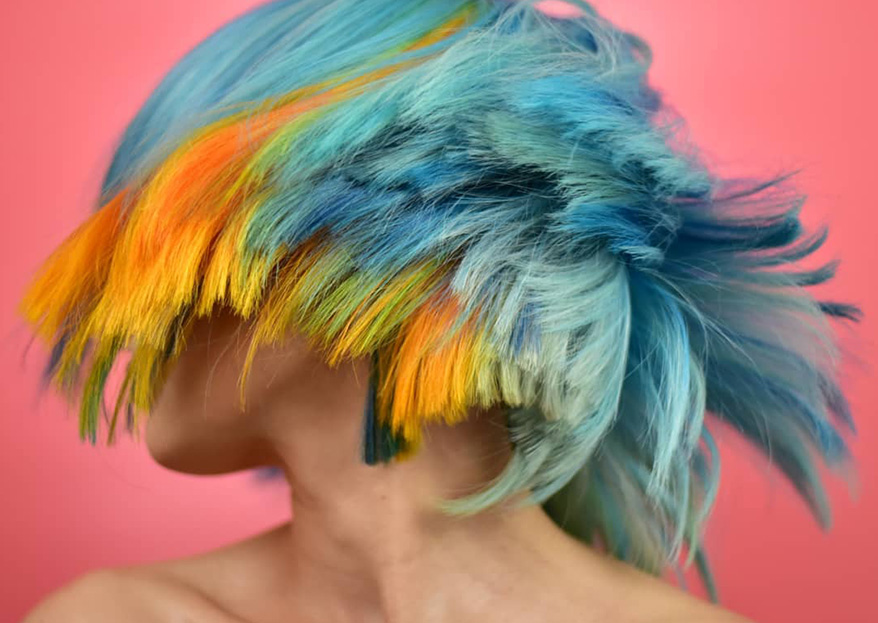
Source: Aveda Artists Instagram
When Horst Rechelbacher founded Aveda in 1978, his line of safe botanical products rocked the beauty world. Aveda products weren’t just good for stylists and guests, but also the Earth. Horst’s vision for plant-based products evolved over the years, and in the late 1990s, he was ready to fulfill another need in the beauty industry: a healthy color line.
Enter Marianne Knutson, a young marketing executive at Redken with a passion for hair color.
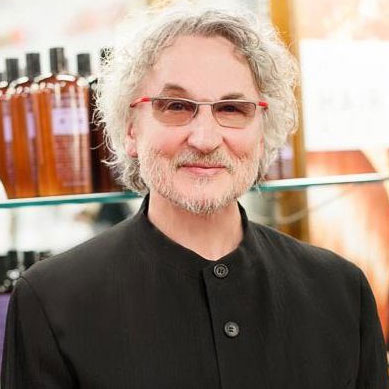
Horst Rechelbacher, Founder of Aveda
“I met with Horst in New York City one morning while I was still with Redken, and he decided to hire me to help launch his new color line,” Knutson says. “I relocated to Minnesota in January of 1996 and stayed for 23 years before retiring.”
Following a Vision
Drawn to Aveda’s mission and culture, Knutson, who went to beauty school and also received a degree in marketing, says color use was far more limited in the mid to late ’90s.
“At the time I started with Aveda, hair color was used predominantly for gray coverage and highlights,” she says.
Horst had a different vision for his color line though.

Marianne Knutson, Retired Senior VP of Aveda Global Marketing
Source: LinkedIn
“I want a color line that will celebrate the artistry of hair color and give the artist a palette with any color they can conceive—not a blended shade line like everyone else,’” Knutson says.
And of course, this new hair color was to be created with the highest percentage of natural ingredients possible to stay in line with Aveda’s mission.
In an industry with a lot of imitation, true innovation is rare. But Knutson says Horst would never settle for anything less.
With her work cut out for her, Knutson set out to do what Horst inspired in all of his employees—to think outside of the box.
“Horst inspired this type of thinking in everyone who worked for him,” she says. “He would tell you what he wanted you to achieve, and then you had to figure out how to do it.”
A Palette for Artists
Knutson knew she had to forget everything she knew about traditional color lines in order to be truly innovative.
“I spent a lot of time going to art stores studying how you blend and mix colors,” she says. “Soon, an idea started to form around a base and pure pigments—a hair color system based on levels and tones that are completely separate.”
At the time, and still to this day, most color lines are pre-blended (Level-6 neutral, Level-6 gold, Level-6 ash, etc.). But Knutson proposed having just one neutral Level (1-10) and allowing the artist to add in the pigment, allowing them complete control over how much goes into each base.
“The idea was to create a line that gave you the base colors—Levels 1-10—then separate the tones out of that, which became our pure tones. The artists create their own shades by adding tones into the base.”
Once she had the concept down, she went into her meeting with Horst armed with a big board and a paint palette.
“I used real paints to demonstrate the idea to him,” she says. “With the pure concentrated pigments, I showed how you could change a neutral base—the first concept for Aveda’s Full Spectrum™.
“With other lines, you could get muddy tones if you mixed 6G with 6C (gold and copper). But with this concept, the neutral base could accept both pigments and you could customize the amount by adding more or less,” Knutson says.
Full Spectrum™ Launches
In July 1997, while Knutson was working on the Full Spectrum™ concept, Aveda launched Shades of Enlightenment: five high-lift blonde shades. These shades could be used for all-over blonding or highlighting, and provided a small launch into the color market before Full Spectrum™ hit salons.
“We wanted to start with a small, curated collection,” says Knutson. “It was 96 percent naturally derived and introduced our ingredient platforms with incredible shine and condition. It was a little taste of the technology to come with Full Spectrum™.”
One year later, in July 1998, Full Spectrum™ launched with pure tones: 16 tubes of color—10 levels and six pure tones.
And with it, Aveda rolled out education on the line for its colorists.
“Because other color lines were pre-blended, we had to create a recommended guide for Full Spectrum™ so our stylists could learn basic mixing and measuring to achieve certain shades,” Knutson says. “Once they learned how to do it, they could figure out how to make a shade more or less vibrant, opening up a whole new world of customization for colorists.”
The Ingredient Story
Knutson wasn’t the only one challenged by Horst in the development of Full Spectrum™. Aveda chemists worked to develop a base with the highest percentage of natural ingredients, including plant oils like sunflower and jojoba.
“The goal was to create an enriching base made with natural oils to result in incredible shine and condition,” Knutson says.
Aveda chemists also patented green tea technology, when they discovered a unique property in green tea extract that acted like a synthetic coupler.
Wendy Prior, executive director of global technical education at Aveda, explains:
“It’s different than henna or nuts and berries mixed in a bowl because it performs like any other permanent or demi-permanent product. When possible, we replace synthetic ingredients with plant-based ingredients and still deliver predictable results with true tonal lift. And our demi formula is ammonia free with a 92 percent naturally derived* base.”
Full Spectrum™ Goes Deep
Over the next few years, Aveda expanded Full Spectrum™ to include new shades, and added a demi formula in 2001. And a big focus was put on preparing for its next big launch in Japan: Full Spectrum Deep™.
“We did a tremendous amount of research to understand the nuances of hair color in Japan,” Knutson says. “You need a lot of lift and a lot of deposit because you’re working on naturally dark hair.”
Knowing a number of US companies had gone into Japan and failed because they hadn’t tailored their lines, the Aveda team conducted focus groups and worked with Japanese colorist Yuji Okawa, who also had a background in chemistry.
“Okawa was a consultant for us on Deep™ and helped us understand the shade range and performance we needed,” Prior says.
Aveda Deep™ launched in 2004, and worked across natural Levels 4 and darker. It gave more levels of lift and had additional levels of pigment as well.
“We tailored it to meet local needs of Japan, but there was a global appeal,” Prior says.
Full Spectrum™ Relaunches with Pure Pigments
In 2012, the core Full Spectrum™ line was relaunched with an improved formula and additional pure pigments.
“Colorists wanted primary and secondary colors,” Prior says. “The pure tones we had in the system weren’t pure shades, they were tertiary colors using the artist color wheel for the selection of tones. Initially, we had to have the line be commercial enough that it wasn’t too hard for colorists to use when we first launched.”
With opportunity for further customization, pure pigments in primary and secondary shades were created: red, yellow, blue, green, orange, violet, offering a full range of all the color choices on the color wheel.
“We launched these in the purest form of pigment, taking customization to an entire new level. They worked so beautifully with the color wheel and color theory—you can literally create anything you want and could be used full strength or diluted,” Prior says.
Demi+ Debuts
A few years later, it was time to give Full Spectrum’s™ Demi line a relaunch. Aveda chemists surveyed colorists to find out what they loved about the existing line and where they felt there were areas for improvement, and in 2018, Full Spectrum Demi+™ debuted.
“We re-tooled all our favorite parts of Deposit Only Color Treatment,” Prior says. “The shine was vastly improved with certified organic kukui essential oil in combination with certified organic castor and jojoba oils.”
A customizable processing time was another improvement to the Demi+™ line. Depending on the end result desired, colorists can choose to process five minutes with a five-volume developer (full processing time for a sheer tonal result) or up to 20 minutes with a 10-volume developer for more opaque gray blending.
All this was made possible with a new gel formula that penetrated the hair shaft without the use of ammonia. The ingredients were pushed even further. With tones now in bigger tubes, they can be used in natural bases to match the corresponding permanent formula or they can be used alone for incredible shine and tone, lasting up to 20 washes. The possibilities were now endless for beautiful, seamless blending, and Demi+ improved the condition of damaged hair. Full Spectrum Demi+™ custom-deposit treatment hair color provides ultimate customization of tonality, intensity and coverage.
The Future Looks Bright (and Neutral, Gold, Copper …)
A year after Demi+ launched, Full Spectrum Vibrants™ hit salons in 2019, giving colorists a bolder, natural and vegan option in their color lineup (as of January 2021, ALL Aveda color and products are vegan). This line of 11 super bold, semi-permanent shades (nine intense colors plus clear and charcoal) were damage-free, 95 percent naturally derived*, and provided radiant shine, leaving clients’ hair in better shape than ever.
With the launch of Vibrants™, Aveda became the only manufacturer with an entire color line—semi, permanent and demi—that’s naturally derived*, and included trending fashion colors, coming full circle back to Horst’s goal of elevating the artistry of stylists.
And in 2022, Aveda will do it again with a Full Spectrum™ relaunch.
“We’re expanding our current range of shades to include five new shades based on colorist feedback,” Prior says. “We’ve also done a formulation upgrade to include more essential oils, and a new and improved alkalizer package with reduced ammonia, better performance, and introducing two new bases to expand on the tried-and-true concept of 10 Levels, but with more control and coverage options.”
“He empowered colorists to be artists and set a completely new benchmark with natural ingredients. Full Spectrum™ elevated color in the industry through ingredients, customization and conditioning properties.”
Timeline of Aveda Color
1997: Shades of Enlightenment, five high-lift blonde shades is Aveda’s first launch into the color market. These shades could be used for all-over blonding or highlighting.
1998: Full Spectrum™, Aveda’s first permanent color line, debuts.
2001: Full Spectrum™ Deposit Only Color Treatment hits the market as a demi option for colorists.
2004: Full Spectrum Deep™ is launched in the Japanese market for Levels 4 and darker.
2012: Full Spectrum™ relaunches with additional pure pigments in primary and secondary colors.
2018: Full Spectrum Demi+™ debuts, improving shine and versatility of the original demi line.
2019: Vibrants™, a line of semi-permanent fashion shades launch.
2022: Full Spectrum™ is set to re-release with even more formula improvements.
*From plants, non-petroleum minerals or water. Full Spectrum™ permanent is 93% naturally derived on average per ISO standards:
| Full Spectrum™ permanent/select Series | 93% |
| Full Spectrum Deep™ | 92% |
| Full Spectrum Demi+™ | 92% |
| Vibrants™ | 95% |
Comments
-
Related Articles
-

Be Curly Boosting Sales
This summer, Aveda rolled out Be Curly Advanced to salons. The new, improved formulas are 100 percent vegan and give textured-hair clients the tools they need to care for their curls and coils at home, including a Be Curly Advanced Intensive Curl Perfecting Masque in addition to an arsenal of high-performing styling products.
READ MORE »
-
5 Reasons Owners Love Aveda Color
Since 1997, Aveda has continued to pave the way in the color market with innovative formulas, packaging and education, all while staying true to its holistic beauty mission. Aveda artists love the line for the limitless possibilities in creating custom color for each guest– but owners have their own reasons the line makes the most [...]
READ MORE »
-

Aveda’s NEW, No-Compromise Color Line
Aveda’s relaunch of its Full Spectrum PermanentTM Vegan Treatment Hair Color is a marriage of artistry, biotech and green chemistry. And it couldn’t have been achieved without true team effort. “We partnered with Aveda educators and artists from around the world to keep what you love and find out what your guest needs,” says Barbara [...]
READ MORE »
-